
Las Posadas Songs: Pedir Posada, the Piñata Song and Music for the Night
Hosting or joining a posada this December? The songs in the order the night uses them, how the pedir posada call-and-response splits between inside and outside, the piñata song, and villancicos for afterward.
The short answer
A posada night uses its songs in this order:
- The procession. The group walks with candles behind two people dressed as Mary and Joseph (or carrying figures of them), usually praying or singing on the way.
- The canto para pedir posada at the door. The group outside sings as the pilgrims asking for shelter. The group inside sings as the innkeepers who turn them away. They alternate verse by verse until the hosts recognise Mary and Joseph.
- "Entren, santos peregrinos". The door opens and everyone sings the final part together while the pilgrims come in.
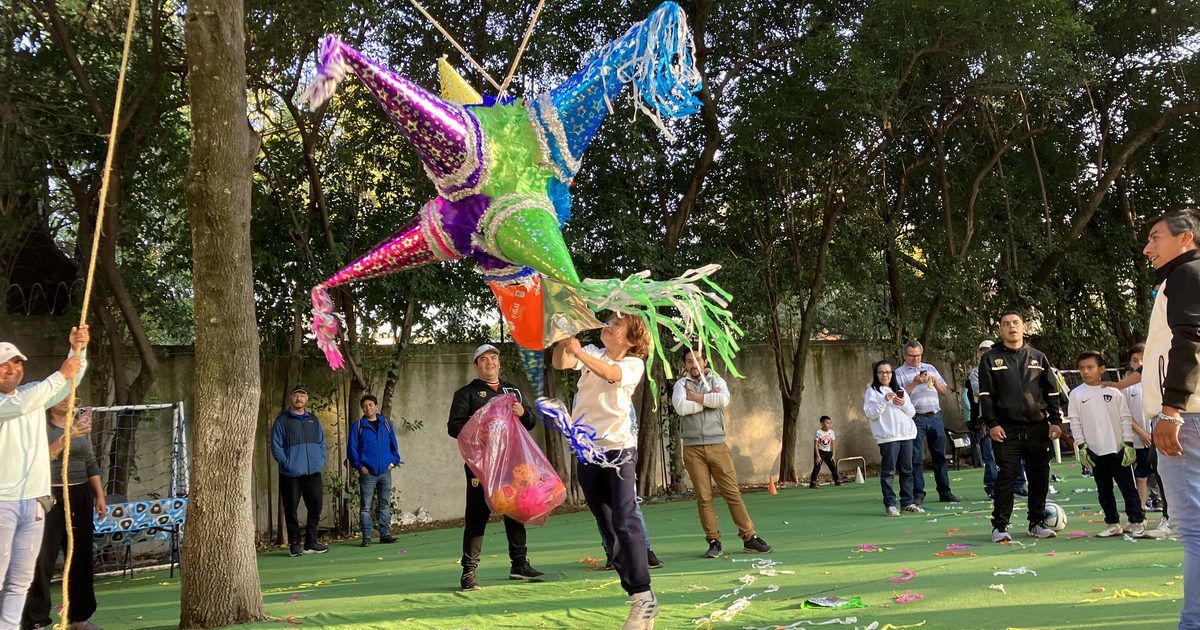
- The piñata, with "Dale, dale, dale". Everyone sings while a blindfolded player swings at the piñata.
- Food, aguinaldos and villancicos. Ponche and something to eat, bags of candy and fruit for the kids, then Christmas songs in Spanish and whatever the family dances to.
Steps 2 and 4 are sung live by everyone there. A playlist only carries step 5, plus practice in the days before. In 2026, Las Posadas run from Wednesday 16 December to Thursday 24 December.
Who this is for
This is for whoever said "we'll host one this year": a parent who grew up going to posadas and is now running one for the first time, a parish or school volunteer putting on a single posada night, or a guest who wants to know what to sing before the door opens.
Traditions differ between regions, parishes and families. If your abuela or your parish does it a particular way, that way wins. What follows is the common shape, with sources, so you can plan it and explain it to people who haven't been to one.
What Las Posadas are, briefly
Las Posadas re-enact Mary and Joseph's search for a place to stay in Bethlehem. They run for nine nights, 16 to 24 December, a novena that many families link to the nine months of Mary's pregnancy (Wikipedia).
The custom started in sixteenth-century Mexico. Pope Sixtus V gave Friar Diego de Soria permission to celebrate nine evening Masses from 16 to 24 December, and the first posada is usually placed at the Augustinian convent of Acolman, near Teotihuacán (Catholic News Agency / EWTN News). Over time the litany, the request for shelter and the piñatas were added, and the celebration moved from churches into homes and neighbourhoods. Today posadas are held across Mexico, Guatemala, El Salvador and Honduras, and in Hispanic communities in the United States (Wikipedia).
How the pedir posada song works
The canto para pedir posada (also called the letanía para pedir posada) is a dialogue between two groups (N+ Cultura):
| Who | Where | Plays the part of | What their verses do |
|---|---|---|---|
| Los peregrinos | Afuera, outside the door | Joseph, with Mary, asking for shelter | Introduce themselves, say they have walked far, say Mary is tired and expecting |
| Los posaderos | Adentro, inside the house | The innkeepers | Refuse, suspect they are thieves, then ask who they are, then recognise them |
| Everyone | Door opening | Hosts and pilgrims together | The welcome, "Entren, santos peregrinos", while the group walks in |
The common version has a dozen short verses, six for each side, and then the shared ending. Each side always starts its line on the other side's cue, so nobody needs to keep count.
What makes it work on the night:
- Print two sheets, labelled AFUERA and ADENTRO, with the shared ending on both. Lyric sheets for this song are easy to find; several Mexican outlets publish printable ones every December, already split by side.
- Give each side one strong singer to lead. Usually that is someone who has done it before. Everyone else follows them.
- The innkeepers need fewer people than you think. Three or four confident voices inside are plenty. Put everyone else outside with candles.
- Agree on the tune beforehand. There is more than one melody in circulation, and the words differ slightly between versions. Pick one recording, send it to the group a week early, and use the sheet that matches it.
- Keep the door closed until the last innkeeper verse. The door opening on "Entren, santos peregrinos" is the moment people remember.
The piñata song: "Dale, dale, dale"
While someone swings at the piñata, everyone else sings "Dale, dale, dale, no pierdas el tino...", roughly "hit it, hit it, hit it, don't lose your aim". It is a traditional folk rhyme with no known composer, and the later verses vary from family to family (USC Folklore Archives). The song doubles as the turn timer: when the verse ends, the next person goes.
The meaning people tell their kids. The classic posada piñata is a star with seven points, and a common interpretation is that the points stand for the seven deadly sins: pride, envy, greed, lust, gluttony, sloth and wrath (Catholic News Agency / EWTN News). The blindfold stands for blind faith, the stick for the strength that overcomes evil, and the fruit and candy that fall out are the reward (México Desconocido). Walther Boelsterly, director of the Museum of Popular Art in Mexico City, told NPR that breaking it symbolises rejecting those sins (KPBS / NPR). The piñata's earlier origins are disputed, so present it as the meaning, not the history.
Running it safely with a crowd:
- Youngest first, oldest last. The little ones get a few swings before the piñata is weak, and the teenagers get the satisfying finish.
- Mark a swing circle on the ground and keep everyone outside it. The person holding the rope stays clear of the stick too.
- One verse per turn. It keeps a line of twenty kids moving.
- Have a bag per child ready for the candy. It avoids the scramble that ends in tears.
Villancicos for after the door opens
Once everyone is inside with ponche, the music becomes a playlist. These are Christmas songs in Spanish that most families at a posada will know:
- "Los peces en el río", a traditional Spanish villancico. The chorus is easy enough that kids join in by the second time through.
- "Campana sobre campana", a traditional villancico from Andalusia.
- "El tamborilero", the Spanish version of "The Little Drummer Boy". Raphael's recording is the best-known one in Spanish.
- "Noche de paz", "Silent Night" in Spanish. Good for the moment when people gather around the nacimiento.
- "A la nanita nana", a traditional lullaby to the baby Jesus. A quiet one for the end of the night.
- "Mi burrito sabanero", the Venezuelan Christmas song by Hugo Blanco, best known from the children's choir La Rondallita (Wikipedia). The "tuki tuki" chorus is the one the kids will ask for again.
- "Feliz Navidad", José Feliciano. The bilingual one that guests who don't speak Spanish can sing.
After the aguinaldos, many family posadas turn into an ordinary party: cumbias, the family's favourites, whatever gets the tías dancing. That part is yours to choose.
A running order you can copy
For a posada that starts at 7 p.m.:
| Time | What happens | Music |
|---|---|---|
| 6:45 | Hand out candles and the two lyric sheets; split the group into afuera and adentro | Villancicos quietly in the background |
| 7:00 | Procession around the block or the yard, with a prayer or the rosary if your family includes it | Sung live, or nothing |
| 7:15 | At the door: canto para pedir posada | Sung live |
| 7:25 | Door opens, everyone sings "Entren, santos peregrinos" and goes in | Sung live |
| 7:30 | Prayer at the nacimiento, if your family does one | "Noche de paz" afterwards |
| 7:45 | Piñata | Sung live: "Dale, dale, dale" |
| 8:15 | Ponche, tamales or whatever you are serving; aguinaldos for the kids | Villancicos playlist |
| 8:45 onward | The party | The family's dance music |
Pause the playlist before the procession leaves. Recorded music coming from the house while people are singing outside throws everyone off key.
Setting it up in Trending Music
Trending Music is our app, so weigh this section accordingly. It is free, and it is useful for two parts of the night: rehearsal and the villancicos.
- Make a rehearsal playlist. Search "canto para pedir posada" and "dale dale dale piñata", listen to a few recordings, and add the one your group will follow: tap •••, then Add to Playlist. Our playlist guide walks through it. Share that one recording with the people who will lead each side.
- Make the villancicos playlist from the list above, plus the songs your own family always plays.
- Check the words. The Lyrics tab in the player shows lyrics when they're available for that recording. Many traditional posada recordings have none ("Lyrics aren't available for this track yet"), so print the sheet for the canto anyway.
- Set repeat to Repeat all so the villancicos keep going while you serve.
One honest catch: the free version shows an occasional full-screen ad between songs, and the music pauses while it's up. During the party that's a short pause. It's also why we'd never put a playlist in charge of the procession or the door. Premium removes the ads, and if your family already uses Spotify or Apple Music, the same lists work there.
If your posada is a parish or community event in a hall with a sound system, ask the parish or venue what music they're licensed to play. A personal music app is meant for home listening.
When are Las Posadas in 2026?
From Wednesday 16 December to Thursday 24 December 2026: nine nights, ending on Christmas Eve (Wikipedia). Many families and parishes host just one posada, or share the nine nights between different houses. The order of the night stays the same either way.
What is the song you sing to ask for posada?
It's the canto (or letanía) para pedir posada. The group outside sings as Joseph asking for shelter, the group inside sings as the innkeepers, and they alternate until the innkeepers recognise Mary and Joseph and everyone sings "Entren, santos peregrinos" together as the door opens (N+ Cultura).
What song do you sing when breaking a piñata?
"Dale, dale, dale", a traditional rhyme that urges the blindfolded player not to lose their aim. The first verse is the same almost everywhere. The later verses vary by family, so let whoever knows them lead (USC Folklore Archives).
The rest of the season
For Christmas Day and the weeks around it, the best Christmas songs is sorted by moment, from party songs to quiet dinner music. If your family also keeps an ofrenda in November, Día de los Muertos songs for the ofrenda starts with the songs your loved ones sang. And if a school or office party needs December music with no religious content, winter songs that aren't Christmas songs has a checked list.